

Dylana Nova Scott
Dylana Nova Scott is an American music-industry executive, entrepreneur, three-time patented inventor, electronics engineer, product designer, guitarist, and recording artist.
Across a career spanning more than four decades, Scott has helped create, position, and bring to market professional guitar and audio products for 3rd Power Amplification, Line 6, X2 Digital Wireless, Sennheiser, and Xwire.
Her amplifier, speaker-enclosure, wireless, and pickup designs have supported the sounds of artists including Joe Satriani, Steve Vai, Neal Schon, Joe Walsh, Vince Gill, Lenny Kravitz, Brad Whitford, Dann Huff, and many others.
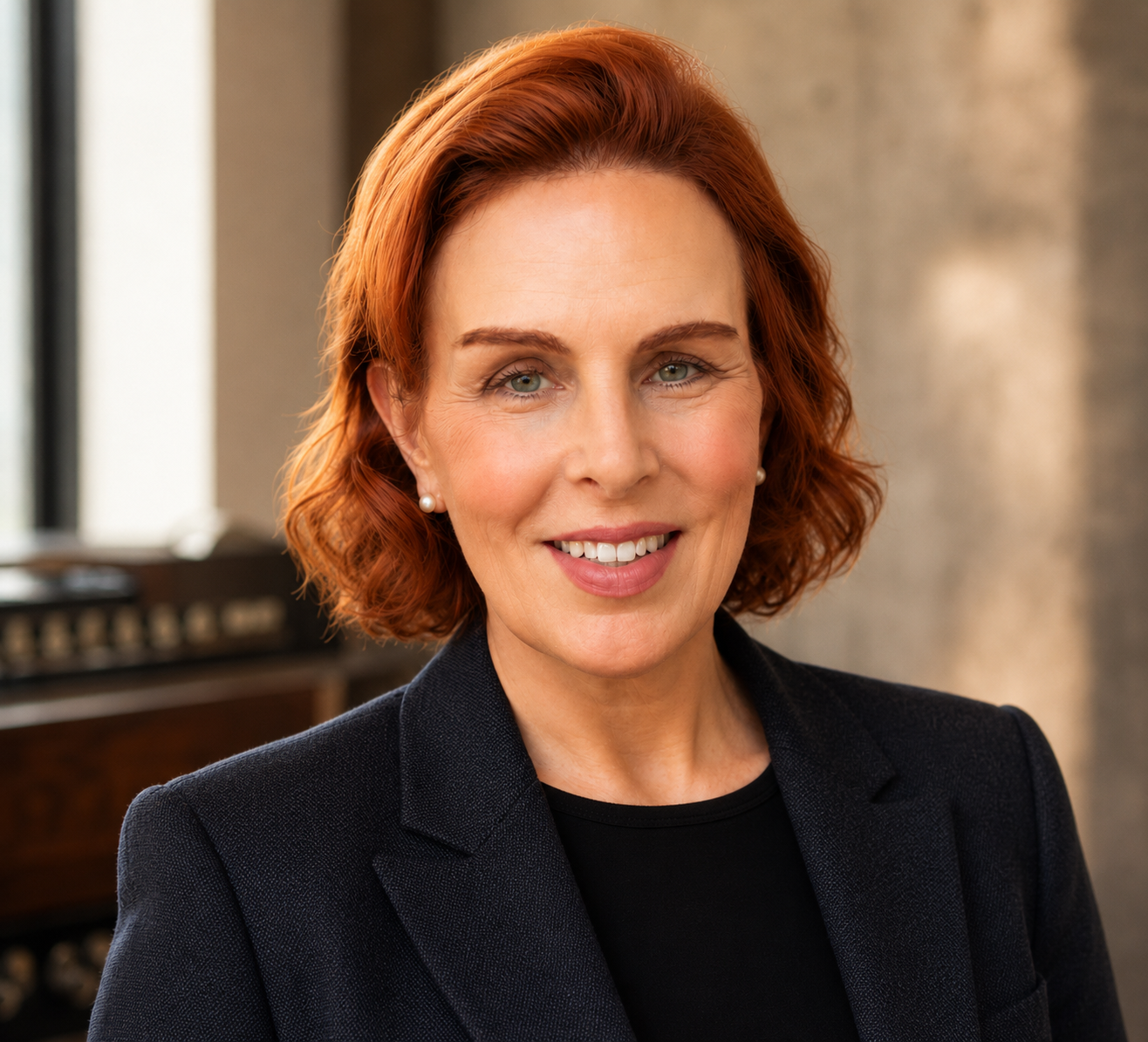
The player came first.
Long before becoming an inventor, executive, and amplifier designer, Dylana Nova Scott was a guitarist.
During the late 1980s and 1990s, Scott recorded and toured internationally with VAIN, whose debut album No Respect was released by Island Records, reached the Billboard 200, and received regular MTV airplay. She later performed with Roadcrew, featuring Steven Adler of Guns N’ Roses, and toured with Big Blue Hearts in support of the band’s Geffen Records debut, opening shows for Joe Walsh.
Her musicianship also led to an invitation to audition for Ozzy Osbourne during the 1990s—an experience that reinforced the importance of touch, dynamics, timing, and equipment that responds naturally under a player’s hands.
Those experiences became the foundation of Scott’s design philosophy. Great equipment is not defined by specifications alone. It should disappear beneath the musician, allowing technique, expression, and creativity to become the focus.
Today, Scott remains an active guitarist, regularly using her own amplifier and pickup designs to evaluate feel, response, and musicality from the perspective of the player—not just the engineer.
Still a player.
In this performance, Scott demonstrates the 3rd Power Kitchen Sink amplifier with a MagFRAG humbucker. The clip reflects the touch, technique, dynamics, and critical listening that continue to shape her work as a guitar-product designer.
Dylana Nova Scott performing through a 3rd Power Kitchen Sink amplifier with a MagFRAG humbucker pickup.
The focus shifted.
Scott’s experience as a working musician gradually led her deeper into the technology and business of professional audio.
After several years specializing in recording systems and professional audio equipment at Bananas at Large, she joined Xwire Digital Wireless as Vice President of Sales and Marketing. There, she helped establish the company as an early leader in digital wireless technology for musicians and supported its successful acquisition by Sennheiser.
At Sennheiser USA, Scott first developed the Northern California territory and later led the company’s western regional sales organization across 13 states. Under her leadership, the region reversed a substantial sales deficit and grew to more than $19 million in annual revenue.
She later joined X2 Digital Wireless as Vice President of Sales and Marketing, helping transform the startup into an award-winning market leader. Following X2’s acquisition by Line 6, Scott managed the transition of its wireless business while contributing to product definition, positioning, pricing, technical communication, and market strategy.
These roles expanded her perspective beyond the performer’s experience. She learned how products move from an idea to engineering, manufacturing, distribution, retail, and ultimately into the hands of musicians.
During those years, Scott began thinking less about individual products and more about the complete player experience. Every component mattered, but no component existed in isolation. The instrument, pickup, amplifier, speaker system, controls, switching, and physical interaction all shaped how naturally the musician could respond in the moment.
That led to a deeper focus on workflow: reducing the friction between the player and the music. A well-designed system should make it easier to move from one sound to another, control volume without losing feel, integrate effects without compromise, and remain intuitive when the pressure is on.
The central question was no longer simply whether a product sounded good.
Did the entire system feel immediate, responsive, and connected to the player?
This systems-level perspective would later become central to 3rd Power. Scott describes the goal as creating a Feel Engine—a musical system whose circuitry, dynamics, controls, ergonomics, and workflow work together so naturally that the equipment begins to disappear beneath the musician.
Answering that question would eventually lead Scott from helping other companies bring products to market to founding a company of her own.
The builder emerged.
In 2009, Dylana Nova Scott founded 3rd Power Amplification to explore the relationship between the player, the amplifier, and the loudspeaker system as a single connected experience.
What followed was years of design, engineering, manufacturing, iteration, and refinement—not only in amplifiers, but across the complete guitar signal chain.
Scott established the company’s product vision, developed its domestic and international sales channels, built its manufacturing operation, managed key supply-chain relationships, and worked directly with musicians to translate performance needs into practical product solutions.
Her work led to three United States patents covering triangular loudspeaker-enclosure architecture, advanced amplifier volume management, and selectable output-range technology. These inventions became the foundation for technologies including TriCAB, HybridMASTER, and Venue Mode.
The purpose was never innovation for its own sake. Each design addressed a practical relationship that musicians had traditionally been forced to accept as fixed:
Power and tone.
Gain and feel.
Volume and response.
Control and connection.
Instead of forcing the player to choose between them, Scott designed systems intended to preserve the musical relationship while expanding control. HybridMASTER allows overall volume to change without abandoning the amplifier’s essential tone and dynamic character. Venue Mode gives musicians practical output ranges for different environments. TriCAB and related enclosure designs manage the interaction between the speakers, cabinet structure, and room.
That same philosophy continued through technologies such as the CitizenLOOP all-tube effects loop, DirecDRIVE gain architecture, level-compensating tube-bias tremolo, multi-frequency UltraPRESENCE circuitry, and the MagFRAG multi-magnet pickup platform.
Scott’s amplifier and enclosure designs have supported artists including Joe Satriani, Steve Vai, Neal Schon, Joe Walsh, Vince Gill, Lenny Kravitz, Brad Whitford, Dann Huff, Steve Miller, and many others.
Give the player greater control—without breaking the connection.
The result is not one amplifier or one invention. It is an evolving body of work built around workflow, feel, and the behavior of the complete musical system under real playing conditions.
Why the work matters.
The ideas behind 3rd Power did not begin as abstract engineering exercises. They came from decades spent performing, recording, evaluating equipment, developing products, leading sales organizations, and listening closely to the needs of working musicians.
Scott understands the difference between equipment that merely produces a sound and a system that actively supports the player. That difference becomes apparent in the way an amplifier responds to pick attack, the way gain develops beneath the hands, the way volume changes affect feel, and the speed with which a musician can move from an idea to a finished sound.
This is why workflow is inseparable from tone. Controls should be understandable. Switching should serve the performance. Effects should integrate naturally. Volume management should preserve musical response. Every part of the system should help the player remain connected to the moment.
Scott’s concept of the Feel Engine brings those priorities together. It describes more than an amplifier circuit. It is the complete interaction between the guitar, pickup, gain structure, power section, loudspeaker enclosure, controls, environment, and musician.
The goal is not simply to create impressive tone.
The goal is to preserve the connection between the player and the result.
That philosophy has allowed Scott to work meaningfully with musicians whose styles, techniques, and performance demands differ dramatically. Whether the player is seeking expansive clean headroom, expressive low-volume response, complex gain textures, or the authority of a full concert system, the design process begins with how the equipment must behave under real conditions.
The result is a body of work that does not ask musicians to conform to the equipment. It gives them greater control while protecting the dynamics, immediacy, and individuality that make their playing their own.
Not just tone.
Connection.
Where the work stands now.
Today, Dylana Nova Scott serves as President and co-owner of Audio Pro Gear, providing strategic leadership across product development, technology, manufacturing, marketing, and long-term growth.
Within Audio Pro Gear, 3rd Power Amplification remains the continuing expression of the work Scott began in 2009: a connected approach to the guitar system built around response, workflow, control, and feel.
The company is no longer defined by a single amplifier, enclosure, or moment in its history. Its current platforms build upon the technologies and design principles developed across more than fifteen years of continuous experimentation.
Products including the DRGN, Kitchen Sink, Aurora, Phantom DRGN, and MagFRAG platforms extend that body of work across amplifiers, loudspeaker systems, and pickups. Each begins with the same question:
How can the system give the musician greater control while preserving the immediacy of the playing experience?
Scott continues to answer that question through direct collaboration with musicians, firsthand evaluation as a guitarist, and an increasingly broad view of how instruments, electronics, physical controls, manufacturing, and musical workflow fit together.
Her role has also expanded beyond the daily work of founding and operating one company. As President of Audio Pro Gear, Scott is helping shape a larger organization capable of supporting established brands, developing new technologies, and bringing musician-centered products to market with greater scale and consistency.
Not a finished idea.
An evolving body of work.
Every new design carries something forward—refining what came before, extending what is possible, and bringing the equipment closer to the moment when the player, the system, and the music become one.
The work, documented.
Dylana Nova Scott’s career, musicianship, product-design philosophy, and work with 3rd Power Amplification have been documented through independent features, interviews, and video profiles from leading voices in the guitar industry.
Dylana Nova Scott: Tone, Attitude, Technique
A detailed profile of Scott’s evolution from touring guitarist to inventor, amplifier designer, founder, and collaborator with Joe Satriani.
Building Amps That Inspire Guitarists
A long-form Off the Record conversation about Scott’s career, musicianship, inventions, and the philosophy behind 3rd Power.
Inside the 3rd Power Factory
An inside look at 3rd Power’s Minneapolis operation, product-development process, manufacturing, testing, and design work.
How Joe Satriani Found the Amp for His Dream Van Halen Tone
Guitar World documents the collaboration between Scott and Joe Satriani that led to the DRGN amplifier and cabinet platform.
Featured Guest with Dave Friedman
Scott joins amplifier designer Dave Friedman for an extended conversation about guitar amplifiers, product development, tone, and the music-equipment industry.
It still comes down to the same question.
Does the system disappear beneath the musician?
When it does, the player stops thinking about the equipment and starts thinking only about the music.
That pursuit has guided every stage of Dylana Nova Scott’s career—as a guitarist, recording artist, executive, inventor, founder, and product designer.
It continues today through Audio Pro Gear, 3rd Power Amplification, and every new technology developed in pursuit of a more connected musical experience.
Better workflow.
Better feel.
Better music.